

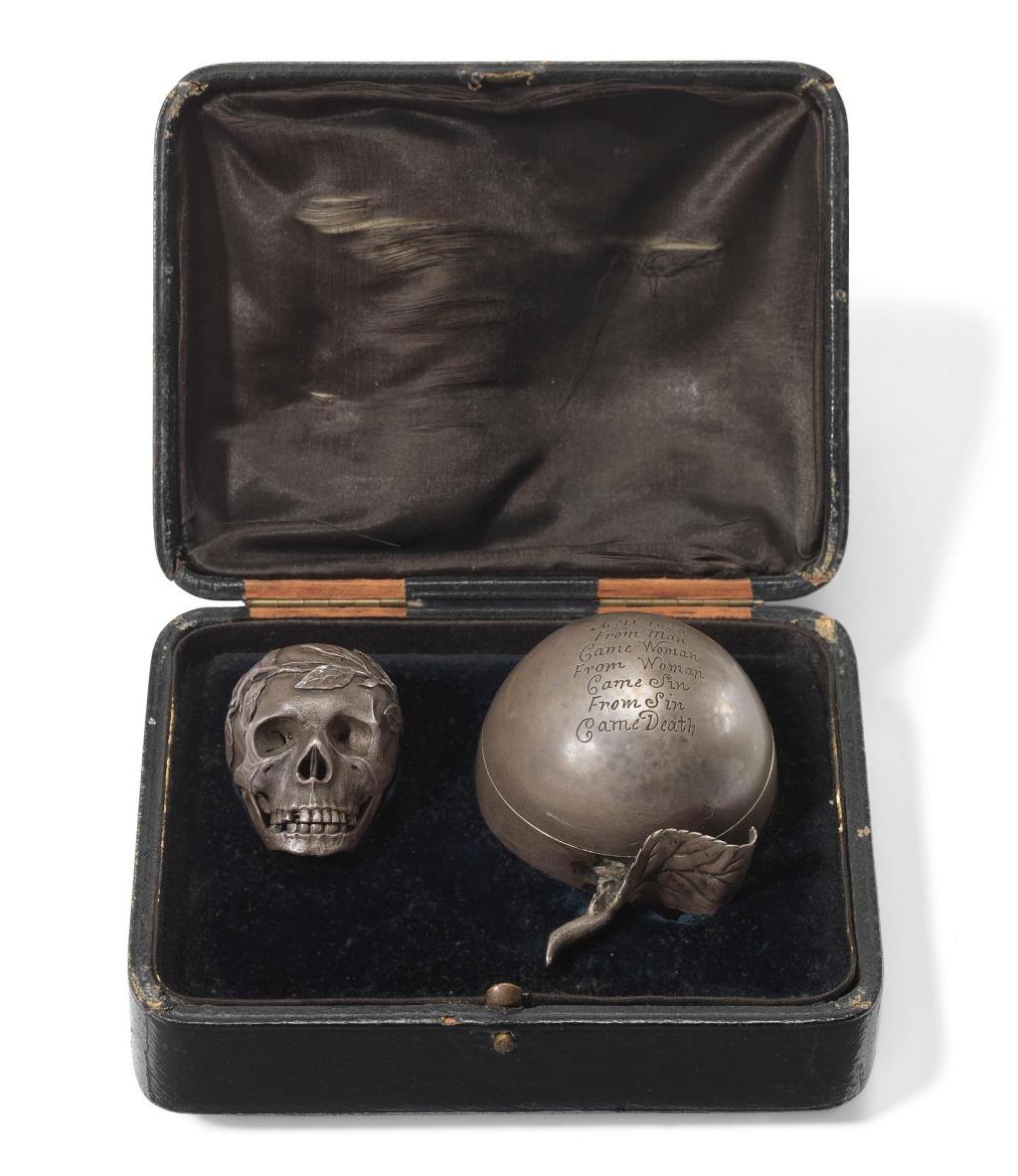
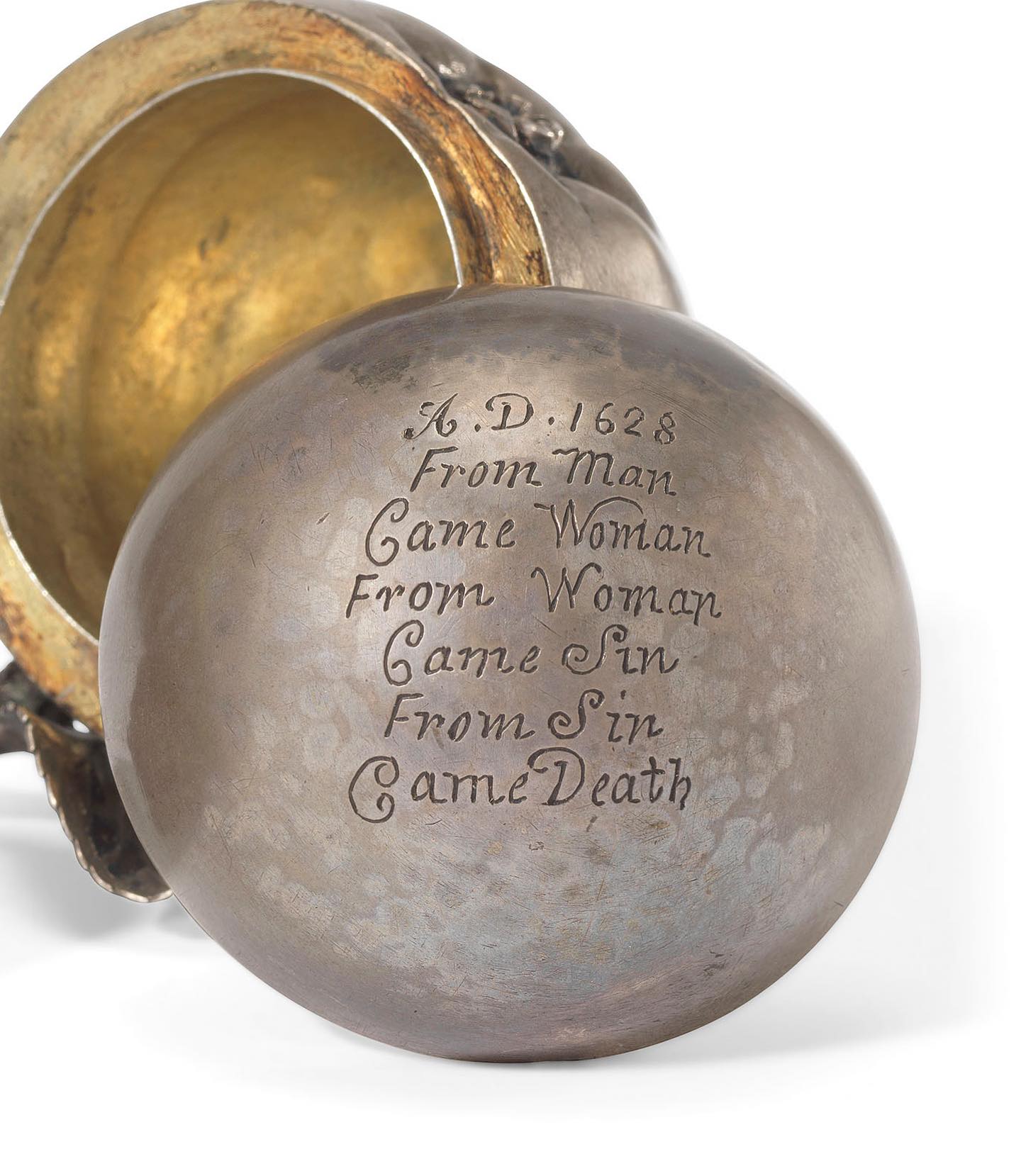
一件神秘且富有深意的17世纪英格兰银质香料盒,外观是一颗被咬过的苹果,表面刻有铭文:“公元1628年 / 男人创造了女人 / 女人带来了罪 / 罪带来了死亡。” 苹果内部藏着一颗骷髅,其顶部可打开,内有两幅小型绘画,描绘基督降入冥府,并刻有铭文:“死后,生命永恒。”
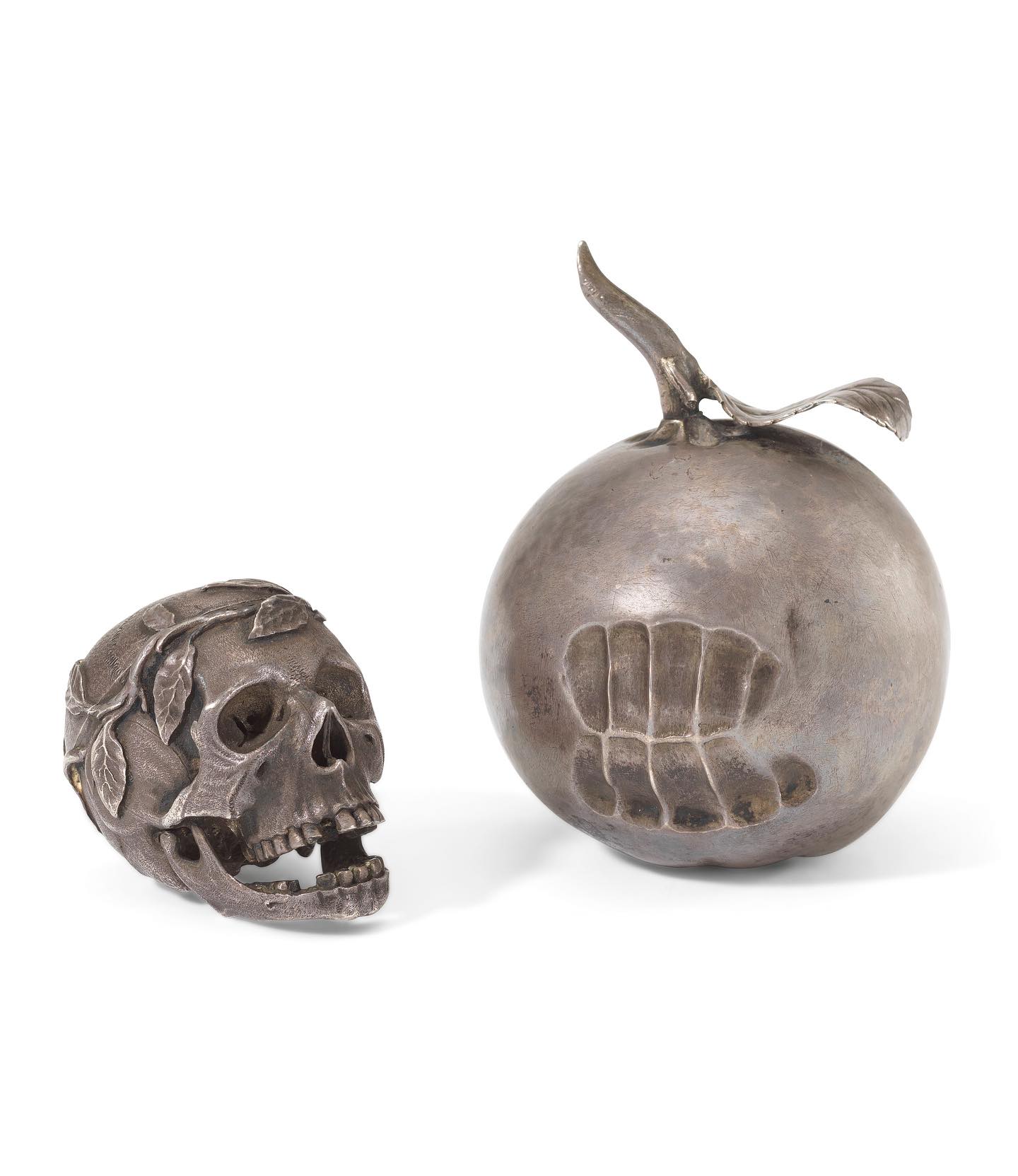
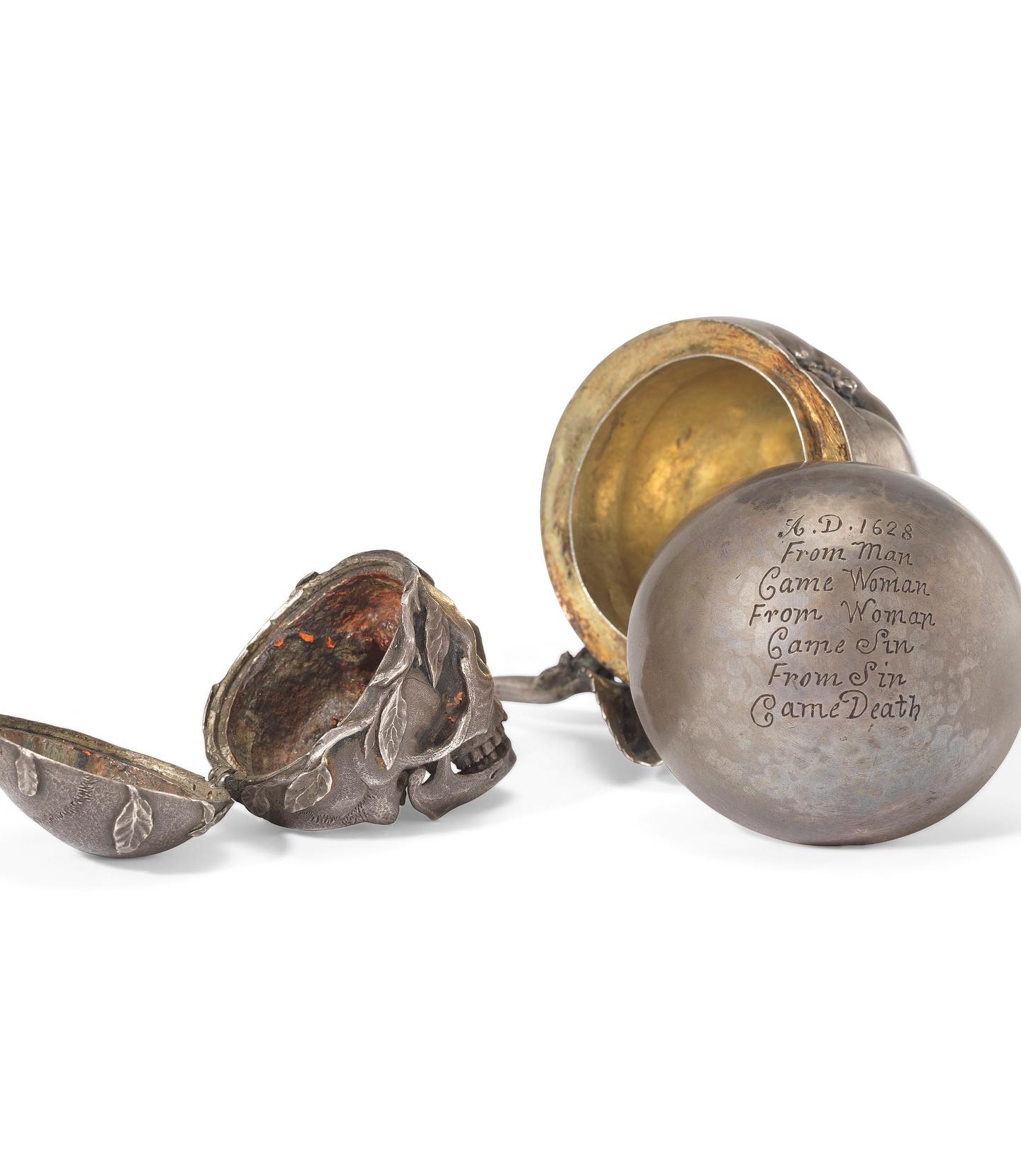
作品的象征意义极为丰富。苹果与咬痕,连同铭文,直指《圣经》中亚当与夏娃的故事,引出人类与原罪、死亡之间的联系。而骷髅则是 “死亡备忘”(Memento Mori),提醒人们生命短暂,终将归于尘土。然而,隐藏在骷髅内部的基督形象与铭文却暗示着另一种可能——死亡并非终点,而是通向永恒的门扉。
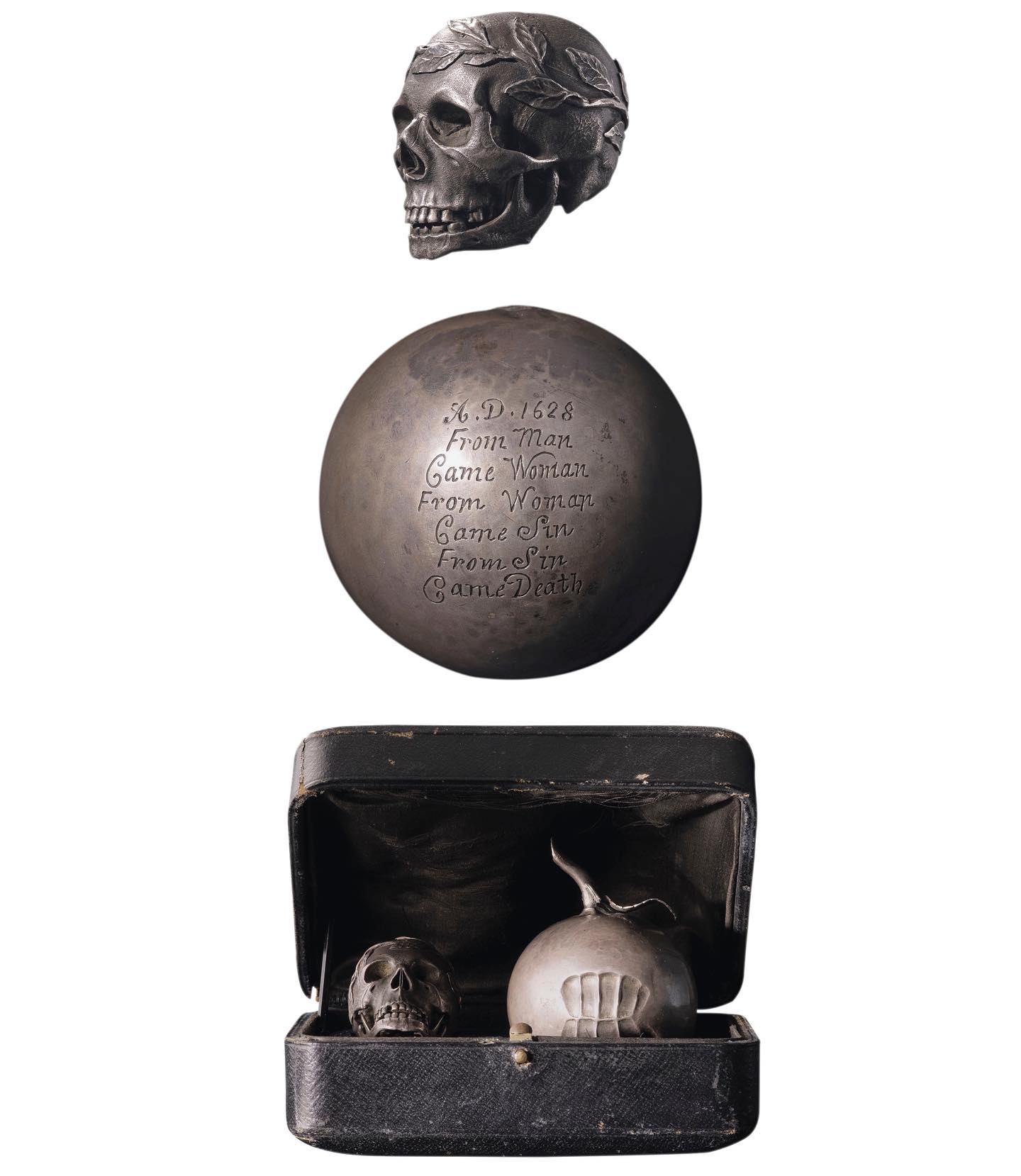
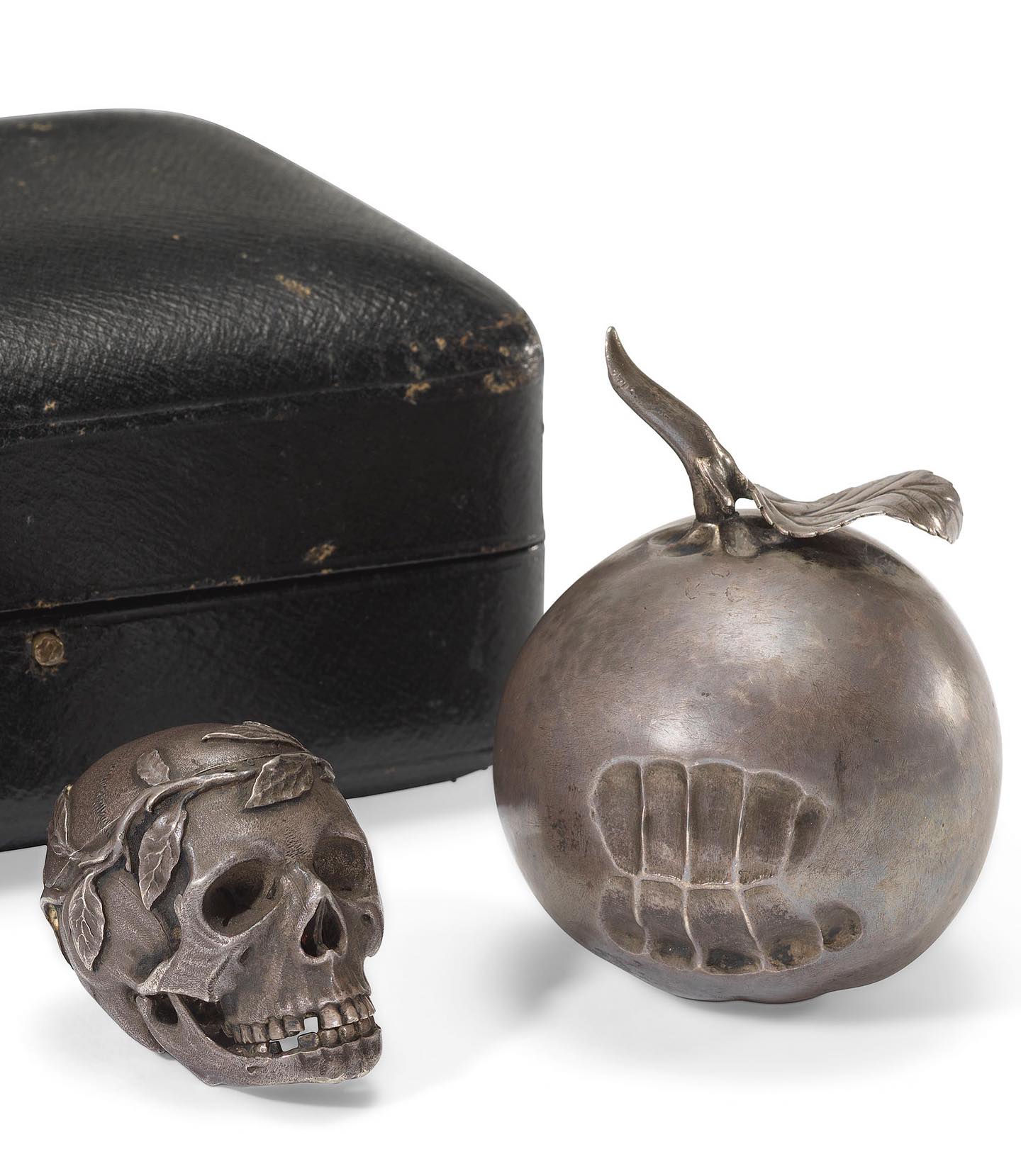
这是一件宗教意味浓厚的作品,但其中对「生与死、罪与救赎、短暂与永恒」的思考,却是跨越信仰、直抵人心的。如果生命终将迎来落幕,我们是否更应珍惜当下?面对无常,你会沉溺于恐惧与虚无,还是在有限的时间里,坦然地向光而行?♡
______
图片由Christie’s拍卖行提供(已售)
「死の後、永遠の命」17世紀の聖書物語を題材にした作品:骸骨とリンゴ型のポマンダー。
この17世紀のイギリス製の銀製ポマンダー は、神秘的で深い象徴性を持っています。外見は一口かじられたリンゴの形をしており、表面には次のような銘文がまれています。「西暦1628年/ 男から女が生まれ / 女から罪が生まれ / 罪から死が生まれた。」その内部には頭蓋骨が隠されており、上部を開くと、キリストが冥界に降る場面を描いた二枚の小さな絵と、次の銘文が現れます。「死の後、永遠の命。」
この作品の象徴は、非常に印象的です。リンゴ、かじられた跡、そして銘文は、すべて聖書のアダムとイブの物語を連想させます。人類と罪、そして死の関係を象徴しています。また、頭蓋骨は「メメント・モリ(死を忘れるな)」というメッセージを持ち、命が儚いものであり、誰もが死を迎えることを思い出させます。しかし、その内側にはキリストの姿と永遠の命の約束が描かれており、死は終わりではなく、新しい世界への入口であることを示しています。
この作品は宗教的な要素を持っていますが、生きることと死ぬこと、罪と救い、儚さと永遠という普遍的なテーマを投げかけています。もし人生がいつか終わるものだとしたら、今という瞬間を大切にするべきではないでしょうか? 無常の中で、恐れや絶望に呑まれるのか、それとも光を求めて歩み続けるのか——あなたは、どちらを選びますか?
“After death, life eternal” A 17th-century biblical-themed artwork: a skull and apple-shaped pomander.
This 17th-century English silver pomander is both mysterious and deeply symbolic. Shaped like a bitten apple, it bears the inscription: “A.D. 1628 / From Man Came Woman / From Woman Came Sin / From Sin Came Death.” Inside, the apple hides a skull. The top of the skull opens to reveal two miniature paintings depicting Christ descending into Limbo, along with the inscription: “After death, life eternal.”
The symbolism here is striking. The apple, the bite mark, and the inscription all reference the biblical story of Adam and Eve, linking humanity, sin, and mortality. The skull serves as a memento mori, a reminder that life is fleeting and that all must face death. And yet, within the skull lies a hidden message of hope—the image of Christ and the promise of eternity, suggesting that death is not the end, but a passage to something beyond.
Though rooted in religious tradition, this piece speaks to universal themes—life and death, sin and redemption, the temporary and the eternal. If life is bound to end one day, doesn’t that make the present moment even more precious? When faced with the uncertainty of existence, will you let fear and despair consume you, or will you choose to walk forward, embracing the light?

 「Art♡Wisdom」|瑩・"Art as Therapy"
您必须登录才能发表评论。