

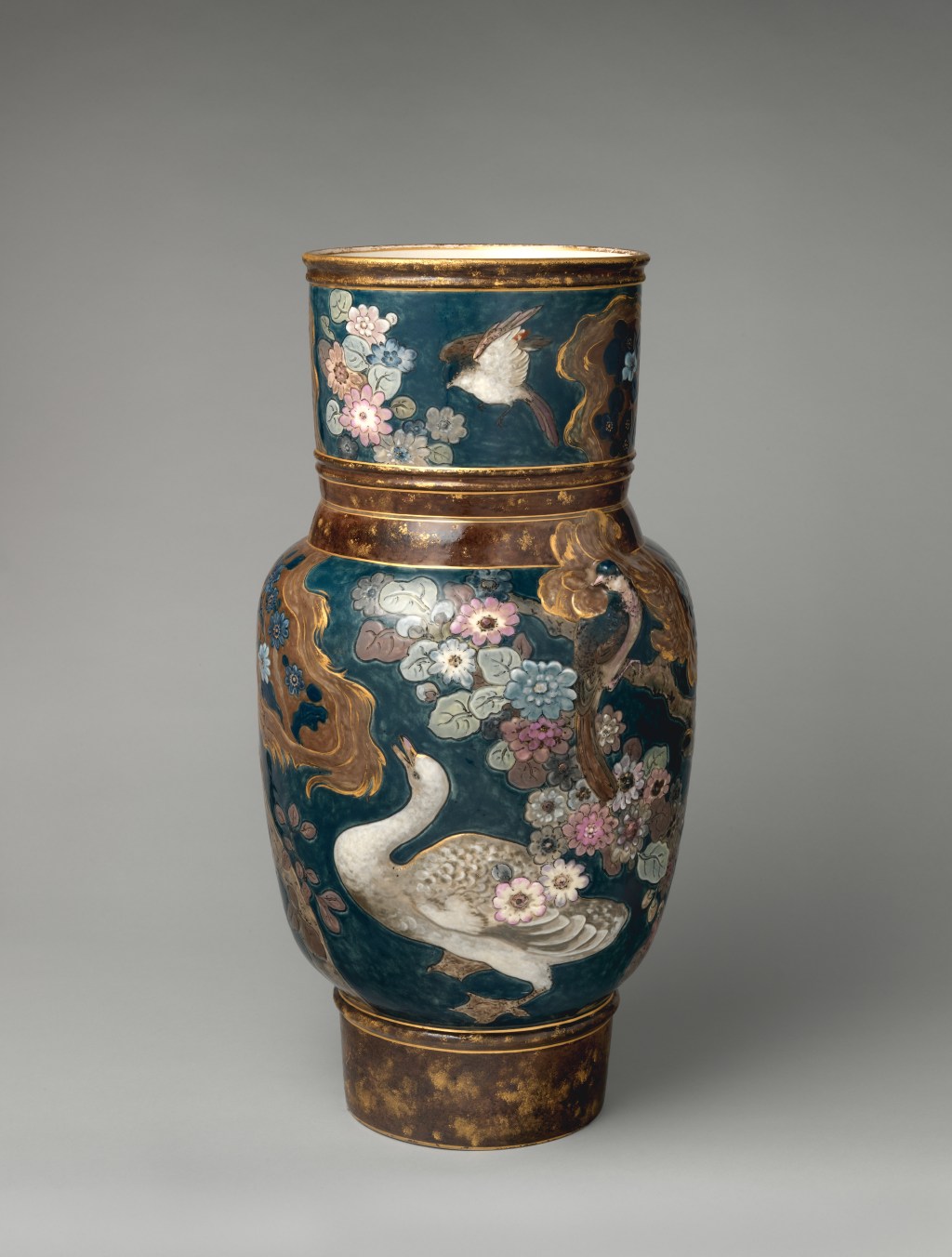
这是19世纪末法国陶艺复兴中的一件代表作,由Haviland工坊出品,Ernest Chaplet主导技艺。那时的前卫(avant-garde)陶艺家重新思考器物的意义。他们相信,陶器不只是用来盛放的工具,也可以是安放情感与心意的方式。
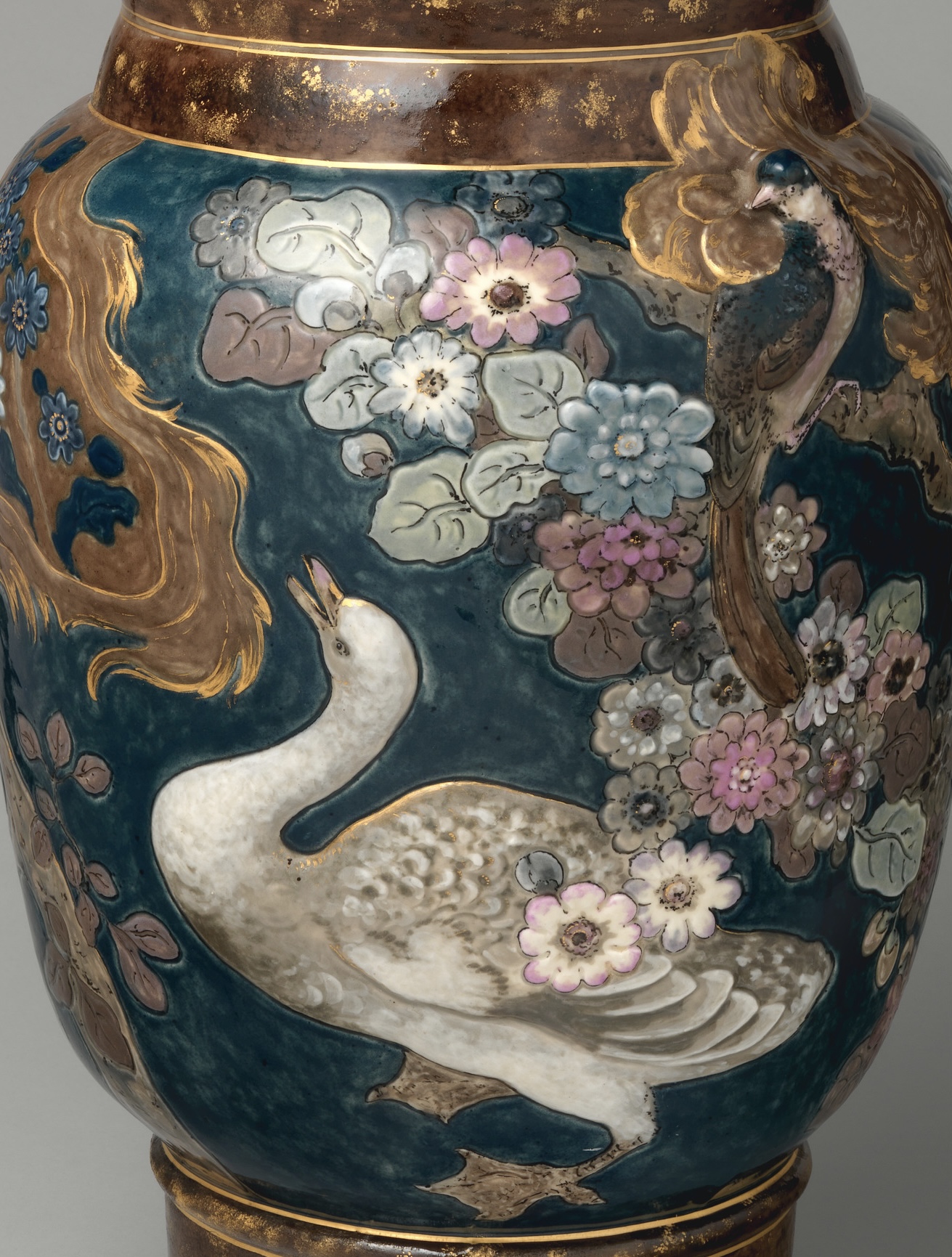
大瓶高六十余厘米,深靛蓝釉色沉静,贴花技法呈现浮雕图案,如笔触轻描,清晰而柔和。
花木扶疏,鸟雀掠影,一只白天鹅踱步于枝影之间,气氛宁静,略带几分内省。
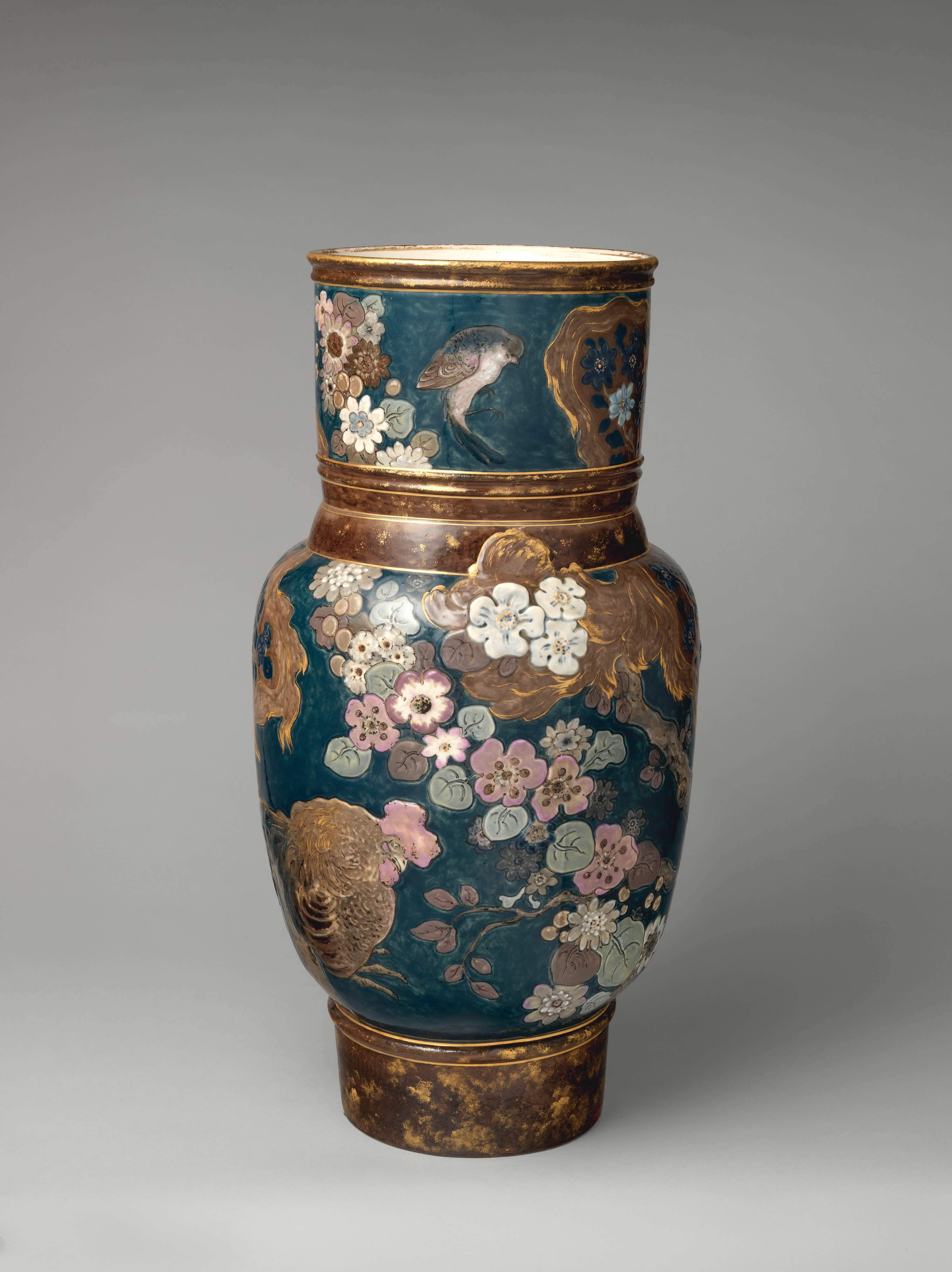
它吸收了日本炻器的沉稳肌理、中国瓷器的釉色与留白上的节制,又融合哥特雕塑的肃穆收束,以及新艺术风格对自然形态的追随。整体层次分明,气韵安然。
这是一种介于工艺与象征之间的表达。
图案不为装饰而生,而是作为语言出现。
天鹅忠贞、高洁而孤独,花鸟环绕,无声却仿佛在说:春日尚在,万物自新。
一代陶艺家,将器物从“功能之物”转为“精神之所”。
他们不急于判断它有无用处,只在意它是否让人放松,愿意停留。
所谓功能,不必等同于被使用。
若一个物件能使人安静下来,感到被理解,被触动,
那便是它真正的用处。
♡
______
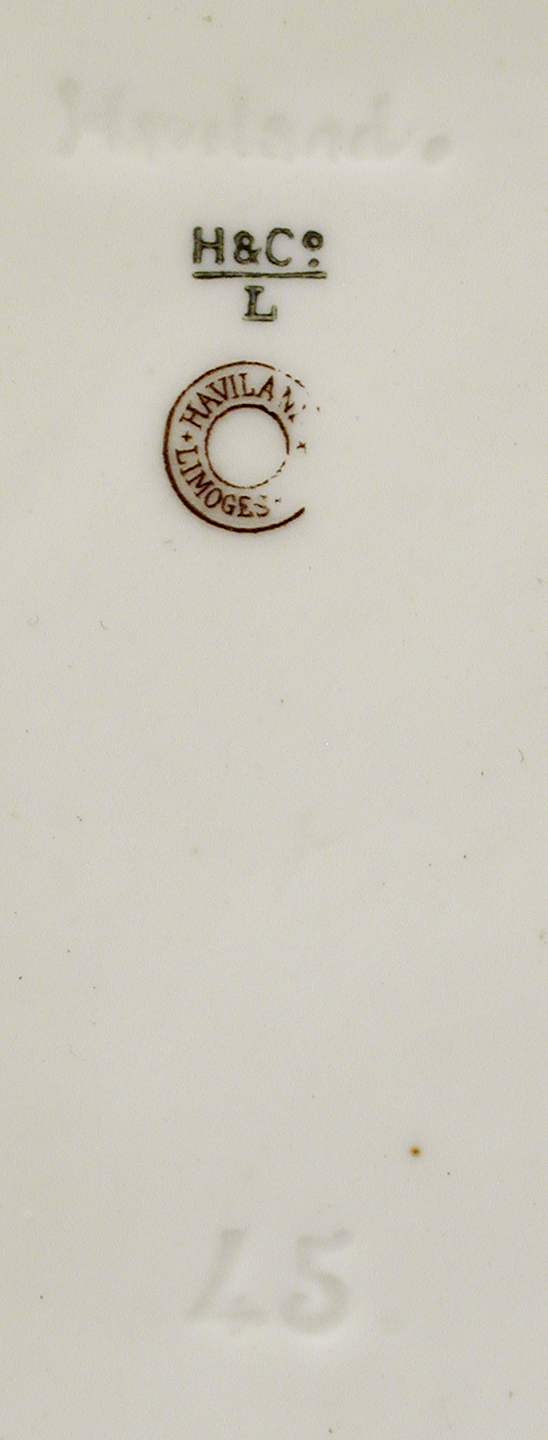
天鹅陶瓷瓶,哈维兰公司(Haviland&Co.,美法合资,1864–1931),约1880年,法国巴黎,瓷器,65.1×32.7厘米,带底款标识,美国大都会艺术博物馆收藏
博物馆解读·Museum Interpretation(点击展开)
19世纪末,法国一批前卫陶艺家决心将陶器提升为真正的艺术形式。他们不再将陶艺视作实用工艺,而是当作一种带有思想与情感的创作。这场陶艺复兴的先锋包括Jean Carriès、Ernest Chaplet、Théodore Deck和Auguste Delaherche。他们既继承手工传统,又通过反复试验追寻失传的古老技艺。面对工业时代繁复而空洞的装饰风,他们主张材料的朴素与真诚,呼应当时兴起的新艺术(Art Nouveau)风格。新艺术运动受英国“工艺美术运动”启发,强调独创性与回归手作精神。这批艺术陶匠从亚洲陶瓷中汲取灵感,尤以1878年巴黎世界博览会展出的日本炻器为代表,亦参考了中国瓷器的造型、釉色与工艺。同时,他们也从欧洲传统中汲取养分,如16至17世纪的盐釉石器,以及哥特风格的雕刻与建筑。在不断融合与创新中,他们创造出一种全新的、属于现代的陶瓷艺术。
原文の静けさが、言葉を変えても残りますように。
May the quiet tone of the original stay intact, even in other languages.
春の光、すべてが新たに|フランス Haviland&Co. 天鵞陶瓶|約1880年
これは19世紀末のフランス陶芸復興の代表作で、Haviland工房が製作し、Ernest Chapletが技術を指導しました。
当時の前衛的な陶芸家たちは、器物の意味を再考していました。彼らは、陶器が単なる物を入れる道具に過ぎないのではなく、感情や思いを宿すための手段であると信じていました。
この大瓶は60センチを超える高さを持ち、深いインディゴブルーの釉薬が静かな深みを与え、貼花技法で浮彫りのような模様が描かれています。
花々が広がり、鳥が舞う、白い天鵞が枝影の中を歩く様子は、穏やかでありながらも内省的な雰囲気を感じさせます。
それは日本の炻器の落ち着いた質感、中国の陶器の釉薬や余白の節制を取り入れ、さらにゴシック彫刻の厳粛さやアール・ヌーヴォーの自然形態への追随を融合させています。全体の構造は明確で、気配は穏やかです。
これは工芸と象徴の間で表現された美学です。
模様は飾りとしてではなく、ひとつの言語として存在しています。
天鵞は忠実で高潔、孤独を象徴し、花や鳥は無言ながら「春はまだあり、すべてが新たに生まれ変わる」と語りかけているようです。
この世代の陶芸家たちは、器物を「機能物」から「精神的な場所」へと昇華させました。
彼らは、その物が実際に役立つかどうかにこだわらず、それが人々に安らぎを与え、心を留めることができるかどうかにこそ意味を見出しました。
「機能」とは、必ずしも使用されることを意味しません。
もし、ある物が人々を静かにさせ、理解されていると感じさせ、心を動かすことができれば、
それがその物の真の役割です。
Spring still lingers, all things are renewed|French Haviland&Co. Swan Vase, circa 1880
This piece is a representative work from the French ceramic revival at the end of the 19th century, produced by Haviland & Co. and under the technical direction of Ernest Chaplet.
At the time, avant-garde ceramicists were rethinking the meaning of vessels. They believed that pottery was not merely a tool for holding things, but also a means of housing emotions and thoughts.
The vase stands over 60 centimeters tall, with a deep indigo glaze that carries a quiet depth. The floral decoration, applied using a decal technique, is clear and soft, resembling gentle brushstrokes.
Flowers and trees unfold, birds flutter, and a white swan walks beneath the branches, radiating a serene atmosphere with a touch of introspection.
It absorbs the steady texture of Japanese stoneware, the restrained glazes and blank space of Chinese porcelain, and merges the solemn lines of Gothic sculpture with the natural forms favored by the Art Nouveau movement. The overall composition is clear in structure, yet calm in presence.
This is an aesthetic that sits between craft and symbol.
The patterns are not merely decorative but speak as a language in their own right.
The swan is pure and solitary, while the flowers and birds, though silent, seem to say: spring is still here, all things are being renewed.
The artists of this generation transformed vessels from “functional objects” into “spiritual spaces.”
They were not concerned with whether something was useful, but whether it could bring relaxation and invite one to linger.
“Function” does not have to equate to being used.
If an object can calm you, make you feel understood, and stir your heart,
then that is its true function.

 「Art♡Wisdom」|瑩・"Art as Therapy"
您必须登录才能发表评论。