

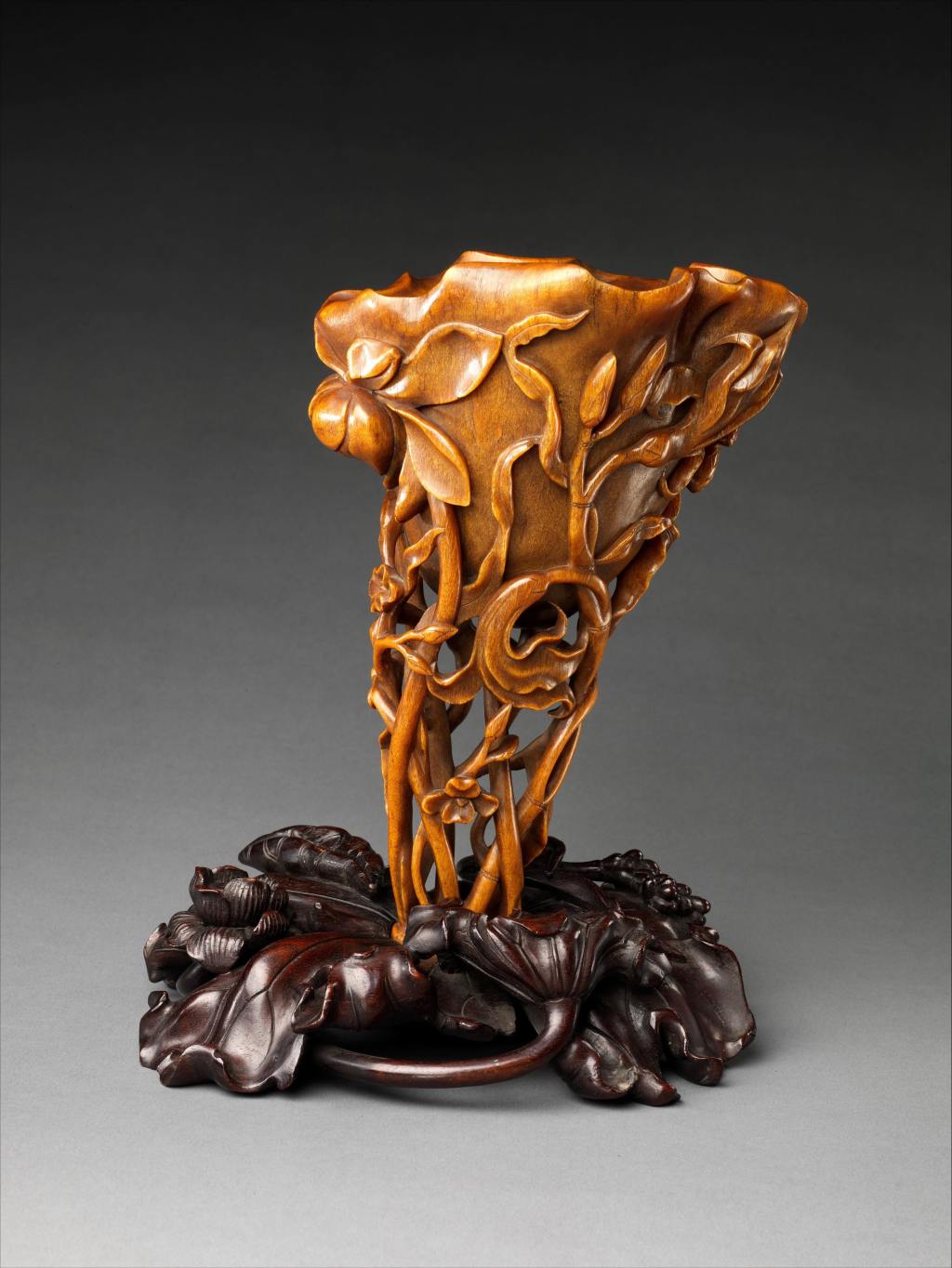
一只用犀角雕成的玉兰花杯,出自18世纪的中国。
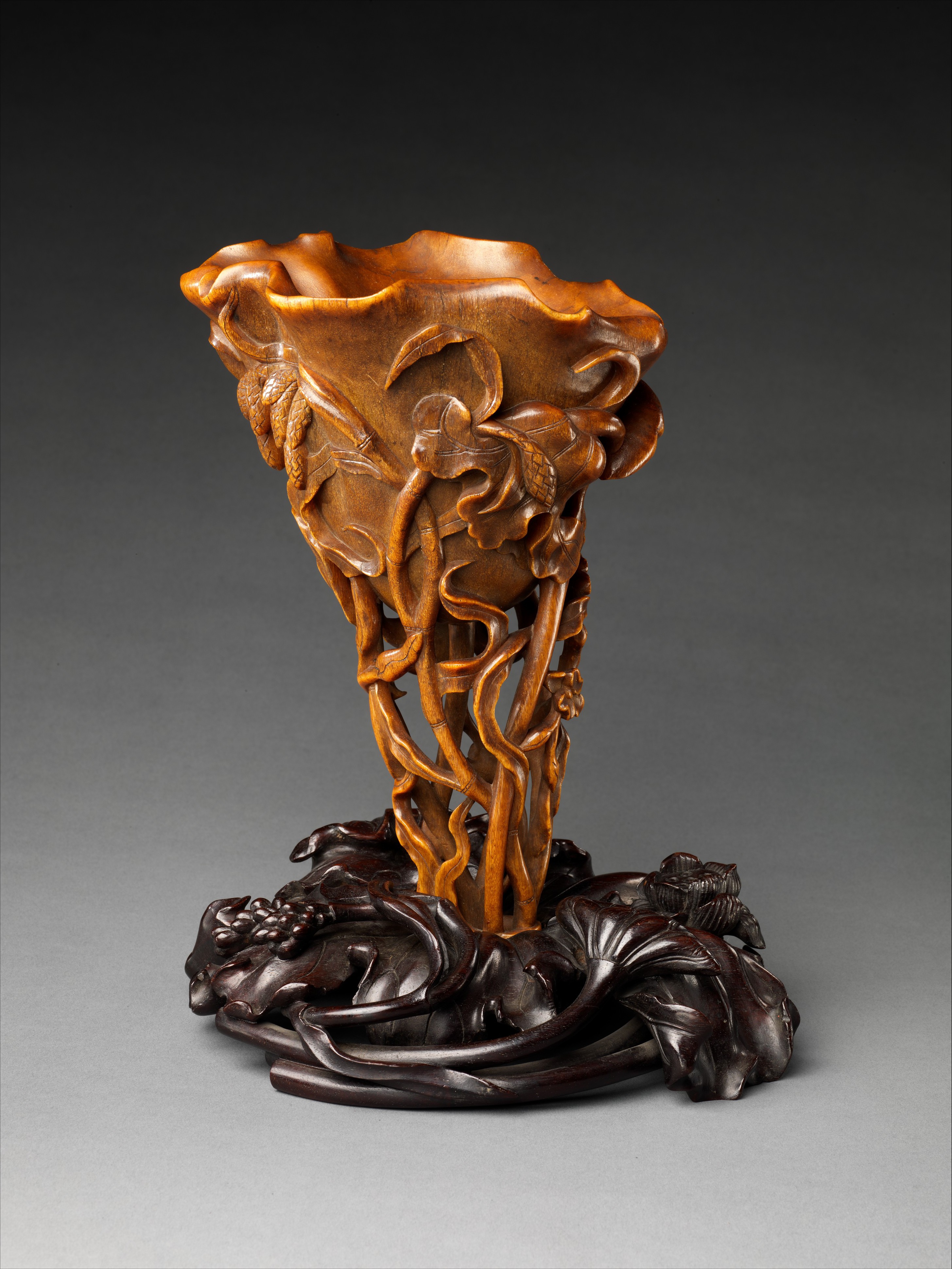
犀牛,曾经在中原大地自由行走,《诗经》《山海经》中皆有记载。后来因气候变迁与人类猎捕,渐渐成为稀有之物。到了唐代,犀角已成为同珍珠、檀香、樟脑并列的舶来珍品。
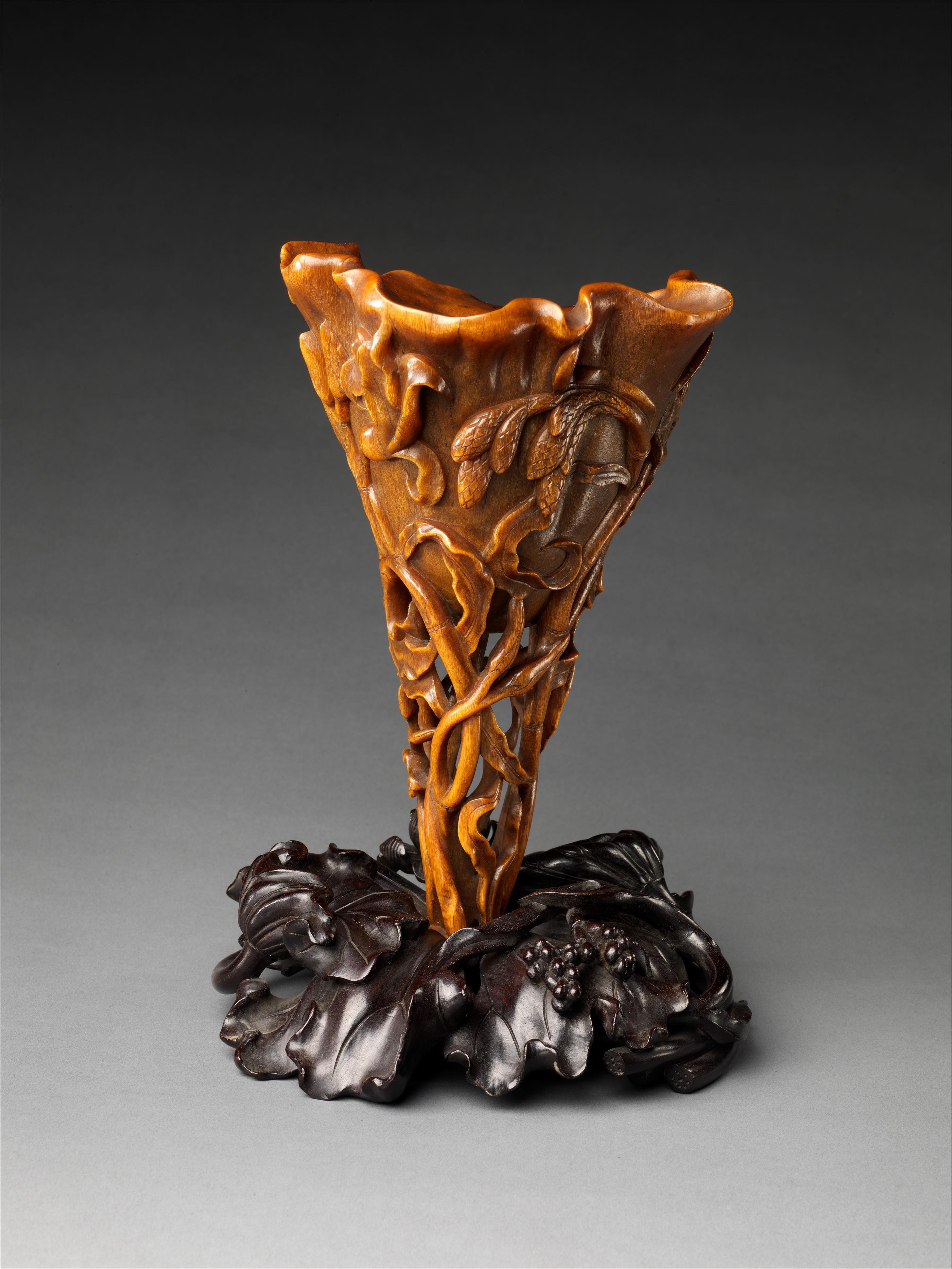
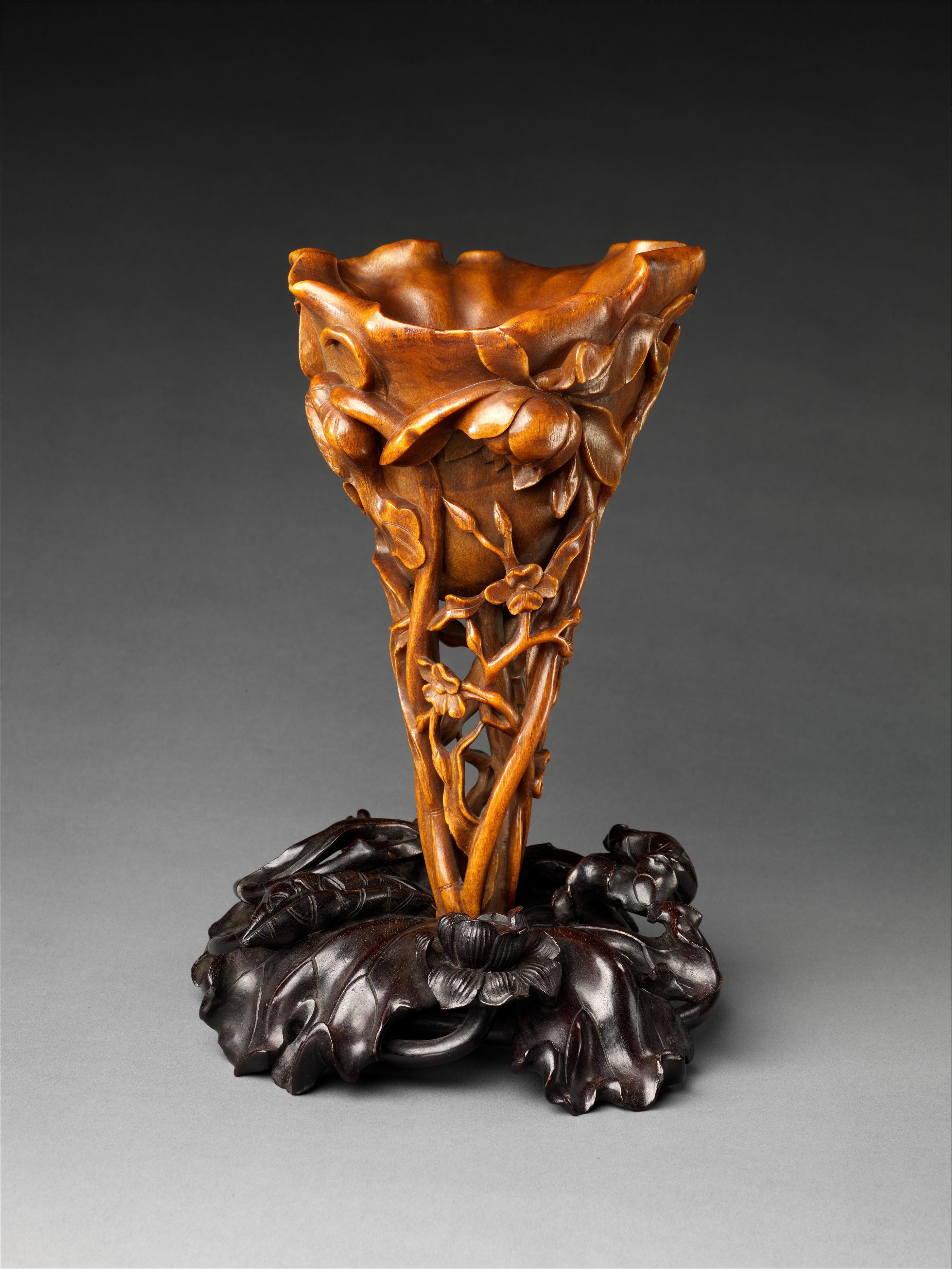
杯身取玉兰初绽之姿,外深内浅,自然形成的双色脉理,是犀角天生的肌理变化。匠人们顺势而为,雕出花瓣的脉络与翻卷,如同时间在角质之间静静铺展。
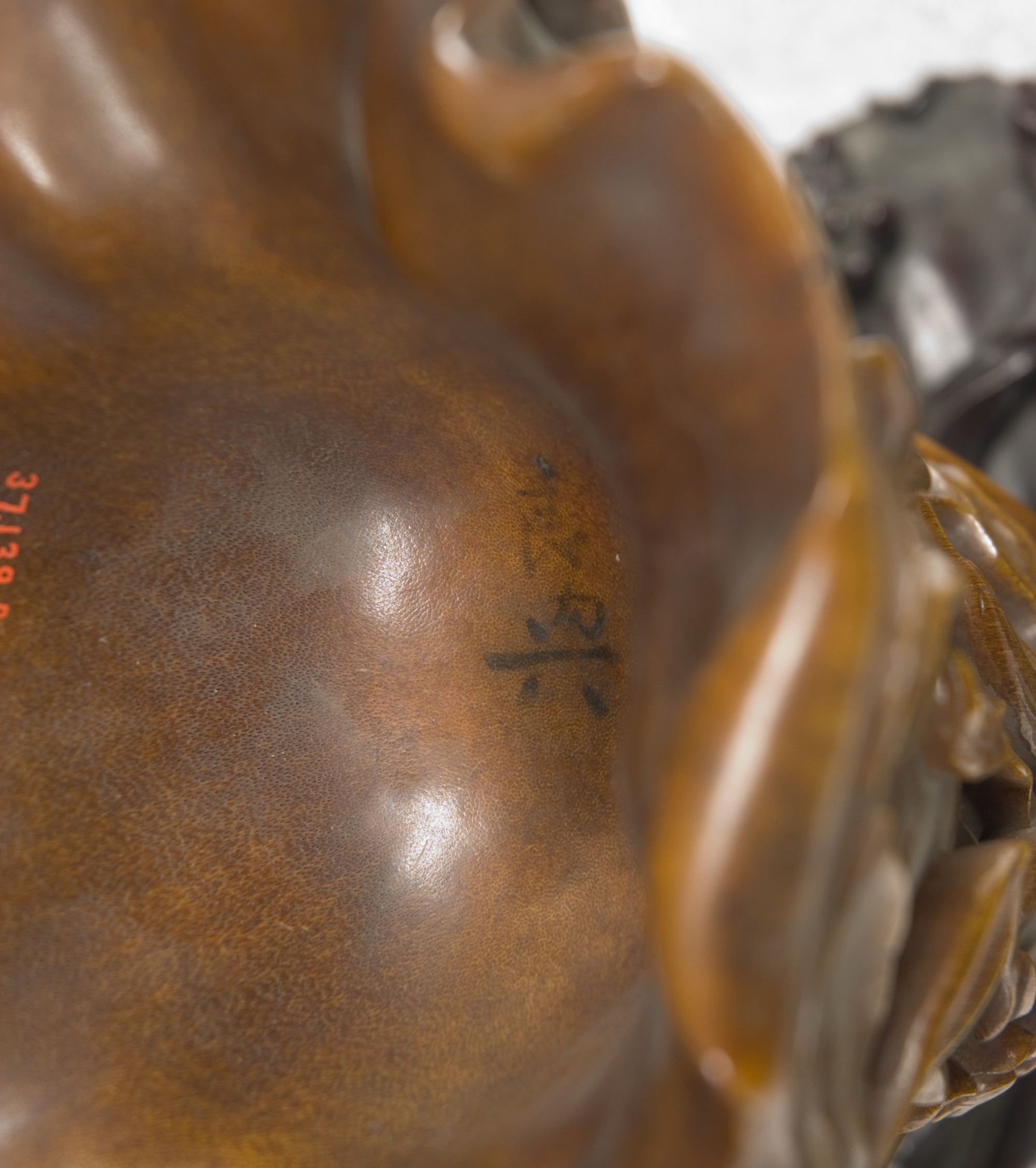
犀角杯被视为吉祥之物,兼具保健与辟邪的寓意(传统观念中犀角可解毒)。既是身份的象征,也是一种对自然珍贵之物的敬意。
这样的器物,多为王侯文人所藏,既用以盛酒,也可静静观赏——饮一杯春色,也饮一杯浮生。
犀角之贵,在于稀有;犀角之美,在于坚韧与温润并存。玉兰静悄悄,花开如故。在时光的流转中,能温柔绽放,也能内自坚韧,如这犀角玉兰,素而不弱,静而不凡——已是难得的圆满。
♡
______
犀雕玉兰杯,清朝(1644–1911),制于18世纪,犀角,含座总高27.9厘米x宽14.6厘米x直径16.8厘米,角制器,美国大都会艺术博物馆收藏
博物馆解读·Museum Interpretation(点击展开)
犀牛在中国曾经广泛分布,但到了公元一世纪时,已成为一种稀有的异域动物。其皮可用于制作盔甲,角则被雕刻成饮酒用的酒杯。自唐代(618–907年)起,犀牛角作为奢侈品之一,与珍珠、檀香、樟脑等舶来品一同传入中国。到了明清时期(16世纪以后),以犀角雕成的精致酒杯广泛流行,用于饮酒及其他祭祀仪式。
原文の静けさが、言葉を変えても残りますように。
May the quiet tone of the original stay intact, even in other languages.
静かでありながら、力強く|玉蘭の花杯:しなやかな春のひととき、清朝、18世紀
これは、18世紀の中国で犀角から彫られた玉蘭の花をかたどった杯です。かつて中国本土には犀が自由に歩いていました。『詩経』や『山海経』にもその記述が見られます。しかし、気候変動と人間による狩猟により、次第に希少な存在となり、唐代には真珠や白檀、樟脳と並ぶ貴重な舶来品とされました。杯の形は、咲き始めた玉蘭の花を写し取り、外側は濃く、内側は淡さを持つ、犀角特有の二色の層を活かしています。職人たちはその自然な文様を尊重しながら、花弁の脈やひねりを彫り上げ、時の流れが角質に静かに刻まれていくような姿を表現しました。犀角の杯は、吉祥の象徴とされ、薬効や邪気払いの力があると信じられていました(伝統的には、犀角は毒消しの力を持つとされます)。それは単なる地位の象徴であるだけでなく、自然の貴重さへの静かな敬意でもありました。このような器は、王侯貴族や文人たちによって収蔵され、酒を注ぐためだけでなく、静かに愛でるためにも用いられました――春の色を飲み、また浮世を味わうために。犀角の貴さはその希少性にあり、美しさは堅さと温もりを兼ね備えていることにあります。玉蘭は静かに、しかし確かに咲き続けます。時の流れの中で、しなやかに花開き、内に力強さを秘める――そんな存在であれること、それは人生において、かけがえのない円熟なのです。
Quiet Yet Unyielding|The Magnolia Blossom Cup: A Gentle Springtime, Qing Dynasty, 18th century
This is a cup carved from rhinoceros horn in 18th-century China, shaped in the form of a blooming magnolia. In ancient times, rhinoceroses roamed freely across the Chinese heartland, as recorded in classic texts like the Book of Songs and the Classic of Mountains and Seas. Over time, due to climate change and human hunting, they became increasingly rare. By the Tang dynasty, rhinoceros horn had become a prized imported luxury, ranked alongside pearls, sandalwood, and camphor. The cup captures the moment of a magnolia just beginning to bloom. Its naturally layered hues—darker on the outside, lighter within—are the inherent textures of rhinoceros horn. Craftsmen followed the material’s natural flow, carving delicate petal veins and curling edges, as if time itself were unfolding slowly within the horn. Rhinoceros horn cups were seen as auspicious objects, believed to possess medicinal and protective powers (traditionally thought to neutralize poisons). Beyond status symbols, they were expressions of reverence for the precious gifts of nature. Such cups were often treasured by nobles and scholars, not only for drinking wine but also for quiet appreciation—savoring a cup of spring, and a cup of life’s fleeting moments. The rarity of rhinoceros horn lies in its scarcity; its beauty, in the harmony of resilience and warmth. Like the magnolia—silent, yet ever blooming—to blossom with gentleness, to hold strength within, is already a rare and precious fulfillment in the flow of life.

 「Art♡Wisdom」|瑩・"Art as Therapy"
您必须登录才能发表评论。