

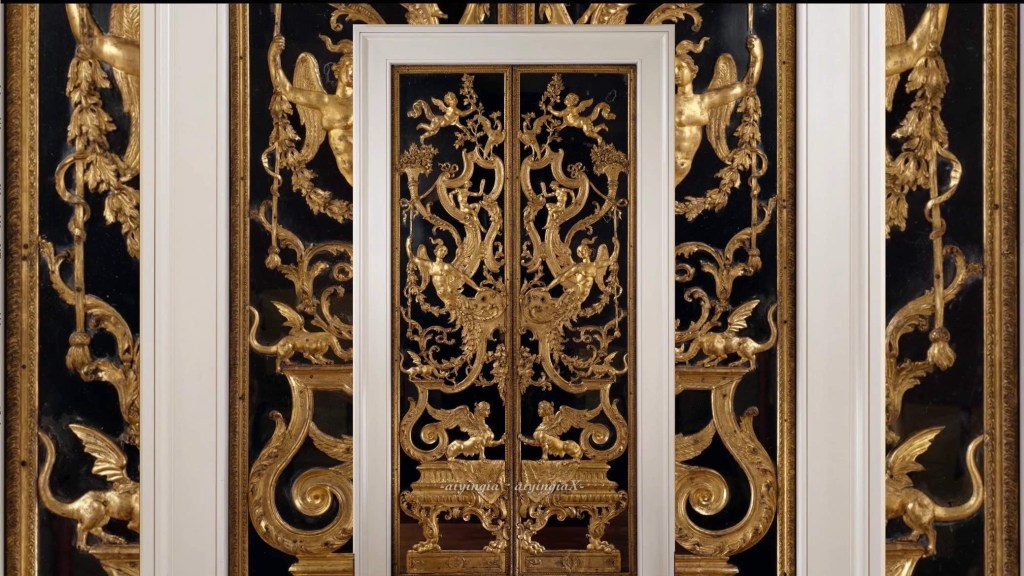
这对金门犹如通往神话的门户。镜面的深黑如宇宙的虚空,金色的雕饰则是人类欲以“有形”对抗“无形”的努力。天使、狮身人面像与花蔓在其中缠绕交织,既象征着神性的升腾,也映照着人间的欲望与荣耀。These golden doors seem like a gateway to myth. The mirrored darkness is as deep as the cosmic void, while the gilded carvings embody humanity’s desire to confront the formless with form. Angels, sphinxes, and entwined vines speak of divine ascent, yet also mirror human longing and glory.
傅佩荣在解读神话时曾说:“神话不是虚构的故事,而是灵魂的地图。人类借由象征的形式,探索存在的深度。”那些浮雕的金光,如同灵魂在虚空中寻找秩序;而镜的黑暗,则提醒人——所有辉煌终将归于寂静。As Professor Fu Peirong once observed in his interpretation of myth: “Myth is not a fabricated tale, but a map of the soul. Through symbols, humanity explores the depth of existence.” The golden reliefs gleam like souls seeking order within the void, while the mirror’s darkness reminds us— all brilliance must return to silence.
光は天から来ると思うけれど、それは心の内から流れ出る。
你认为光明来自天上,其实它正从你心中流出。
You think the light comes from above, but it flows from within your heart.
Du glaubst, das Licht komme von oben, doch es strömt aus deinem Herzen.

鏡は空なれど、万物を映す。魂もまた、空にして明るい。
 镜子空无,却映照万象,如同灵魂,因虚而明。
The mirror is empty, yet holds all things—as the soul does, bright through its void.
Der Spiegel ist leer und hält doch alles, wie die Seele, hell durch ihre Leere.

門の前の天使たちは誰も守らない。ただ見つめる、形を通りぬける光を。
门前的天使不守护任何人,他们只是注视,那道穿越形体的光芒。
The angels at the gate guard no one, they only watch the light that passes through form.
Die Engel am Tor bewachen niemanden, sie schauen nur auf das Licht, das durch die Form geht.

金は夢、鏡は夜、あなたはその息のあいだの火花。
黄金是梦,镜面是夜,而你,是那呼吸之间的火花。
Gold is a dream, the mirror is night, and you—the spark between two breaths.
Gold ist ein Traum, der Spiegel die Nacht, und du—der Funke zwischen zwei Atemzügen.

名をすべて捨てるとき、神は沈黙の中で名を与える。
当你放下所有名字,神便在沉默中为你命名。
When you drop all names, God names you in silence.
Wenn du alle Namen loslässt, gibt Gott dir einen neuen im Schweigen.

あなたは問う、永遠とは何か?
你问,何为永恒?
You ask,  what is eternity?
Du fragst: Was ist Ewigkeit?

闇の中で踊る光である。
 ——是「光在黑暗中不息的舞蹈。」
It is light dancing in the dark.
Licht, das im Dunkel tanzt.
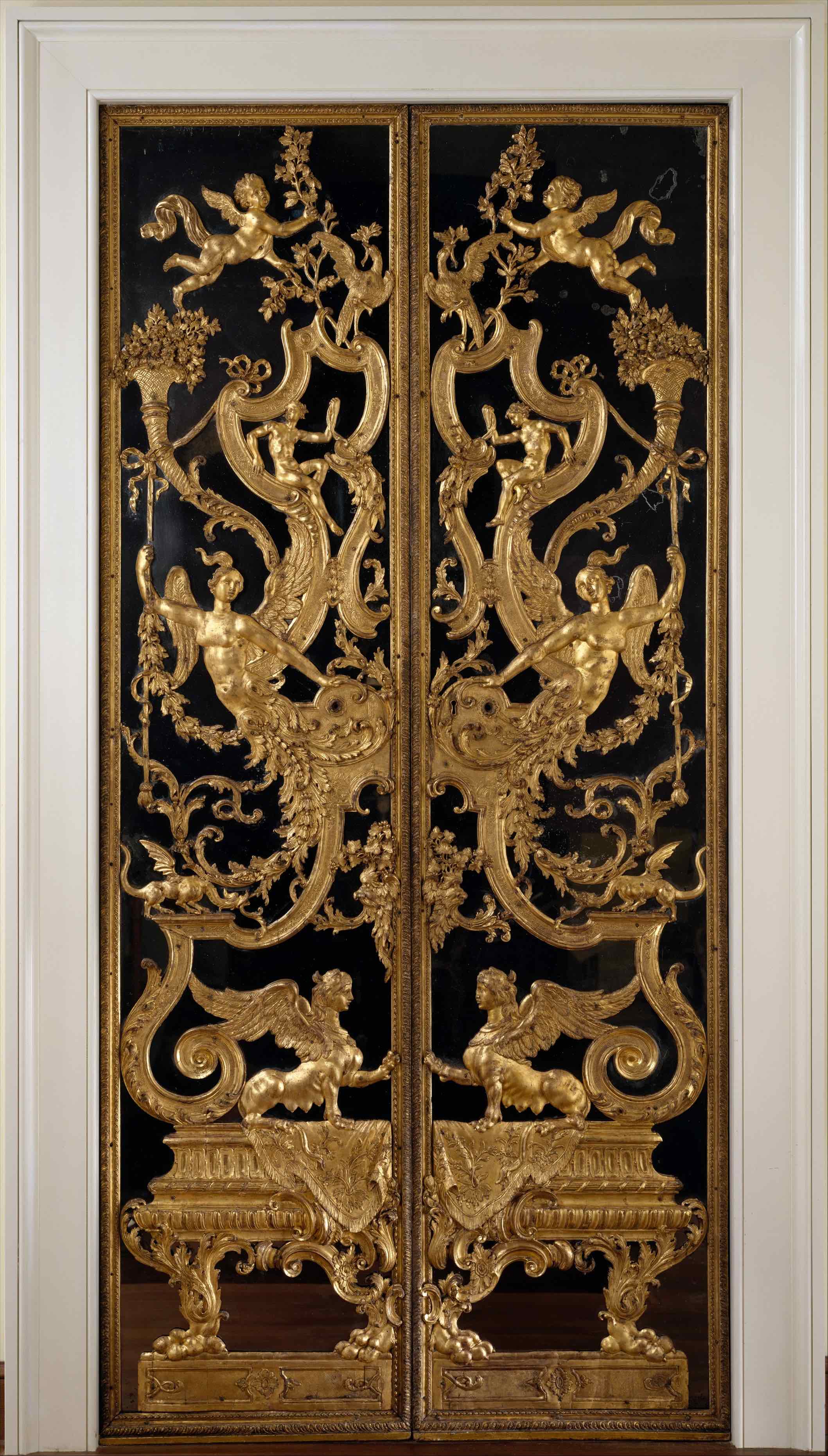
《镶镜双扇门》|意大利,约1743-44年|纽约大都会艺术博物馆
Pair of mirrored double doors, Italian, ca. 1743–44, The Metropolitan Museum of Art
Medium: Lindenwood, carved and gilded; mirrored glass panels, walnut, pine
Dimensions: 8 ft. 11 1/16 × 25 × 2 1/2 in. (272 × 63.5 × 6.4 cm)
Object Number: 1991.307a, b

设计者:
洛伦佐·德·费拉里(Lorenzo de Ferrari) (1680–1744)

博物馆解读:
此为四扇双开门之一,原用于意大利热那亚的卡雷加-卡塔尔迪宫(Palazzo Carrega-Cataldi)的“黄金厅”(Golden Gallery)。门上的金色浮雕以镜面为底,雕饰精致繁复,展现了洛可可时期典型的奢华与幻想气息。1890年代末,美国建筑师斯坦福·怀特(Stanford White)购入并带至纽约。

Music / 音乐: “Ancient Mysterie” — Jon Presstone
Created by / 制作: aiyingia
Text Iinspired by the spirit of Rumi’s poetry. 文字灵感取自鲁米诗歌的精神意象。
Released on / 发布于 2025.10.25
【万物生(All Things Become)】Kaleidoscope 系列,大多取材自博物馆藏品。透过镜像与光的呼吸,让古老的器物在流动中重生。万花筒之美,在于其生成并非全然可控。有形与无形在此相遇,如老子所言:“有之以为利,无之以为用。” 傅佩荣曾解:“有,为形;无,为气。形成其貌,气赋其生。” 当形与意,理与情,再度平衡;当有与无,彼此成全,万物生。

 「Art♡Wisdom」|瑩・"Art as Therapy"
您必须登录才能发表评论。